
Fruit or Sport?
What is squash?
If you have not yet been introduced to squash or are rusty on the rules, this page will act as a brief lesson going over the most important takeaways.
Please feel free to reach out and contact one of our coaches or staff-members if anything is confusing. We also offer lessons and clinics for players of all experience levels.
Equipment
*Equipment Standards according to US Squash.
How to play
Scoring & penalties
Overview
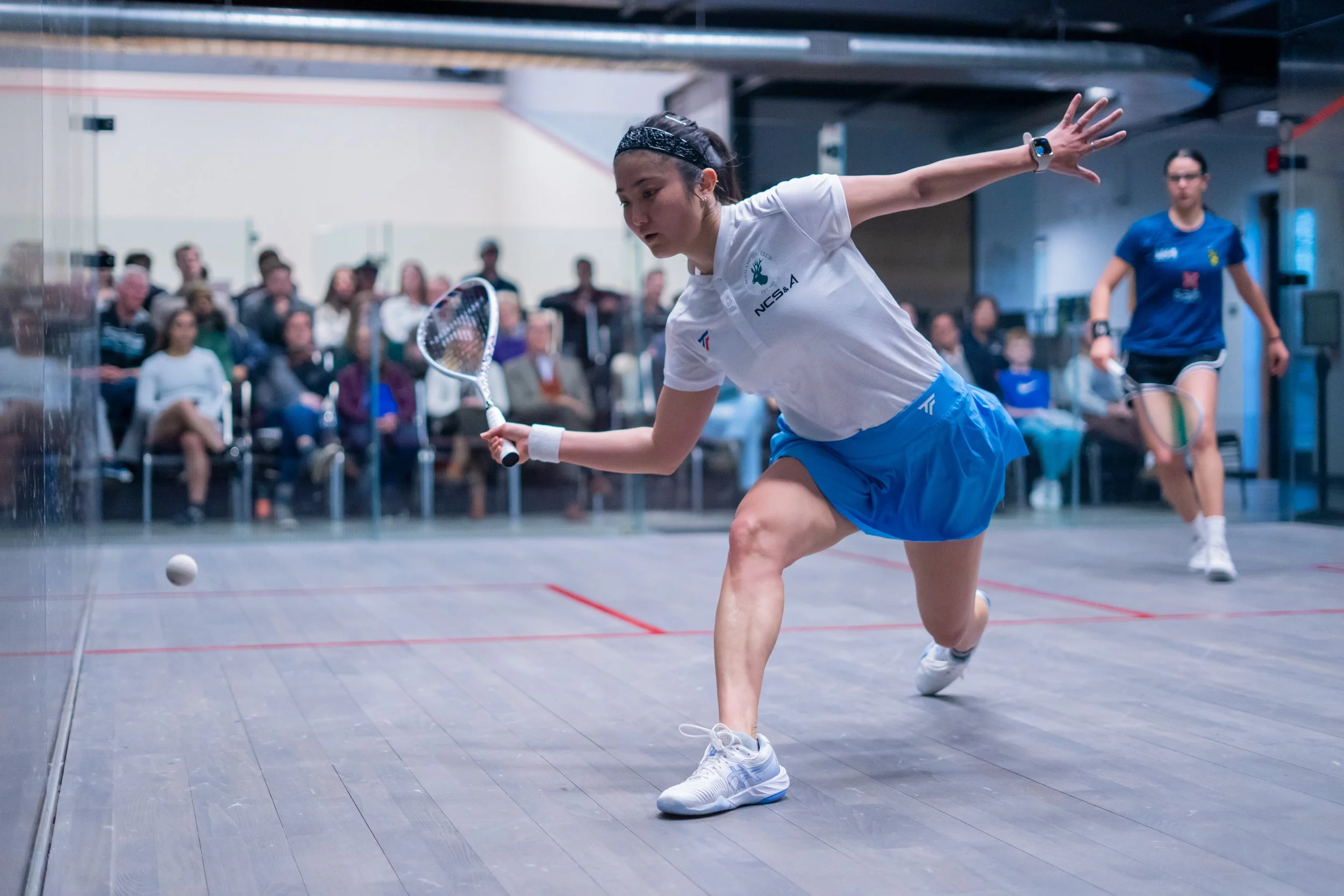
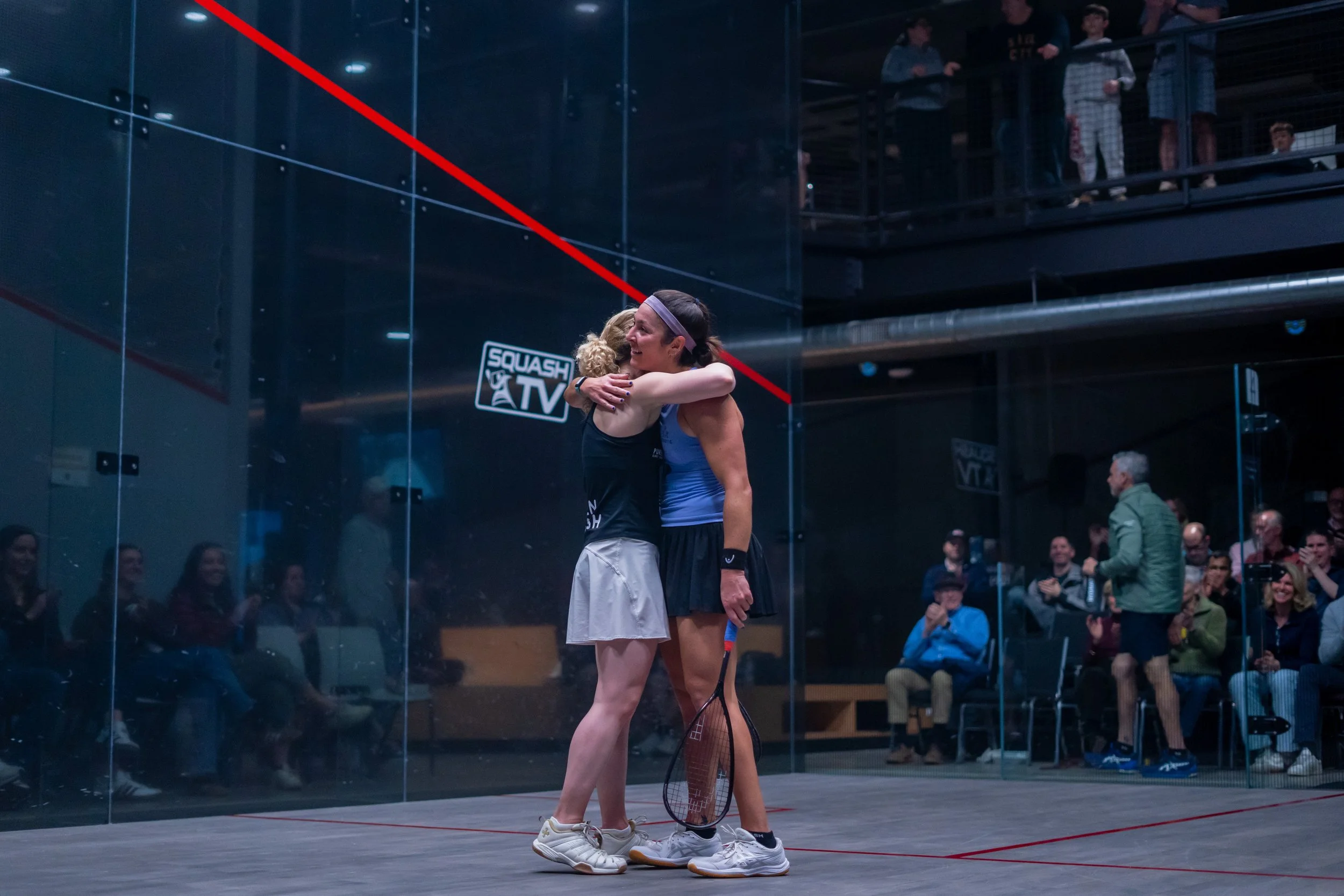
Squash is a game played with racquets and a hollow rubber ball. Players take turns striking the ball against the front wall, maneuvering around one another after the ball returns from the front wall and before it bounces on the floor twice. Each sequence of players taking turns hitting the ball is called a “rally” with the objective of earning points by withstanding your opponent’s strikes/making it impossible for your opponent to return the ball.
Singles
A game between two players in a standard 32 ft. long by 21 ft. wide court using a soft ball and standard squash racquets. The winner must earn 11 points.
Squash Singles was invented in 1860 at Harrow School in England.
Doubles
A game between four players (two on each team) in a 45 ft. long by 25 ft. wide court using a hard ball and heavier squash racquets. The winner must earn 15 points.
Squash Doubles was invented in 1907 at the Racquet Club of Philadelphia.
-
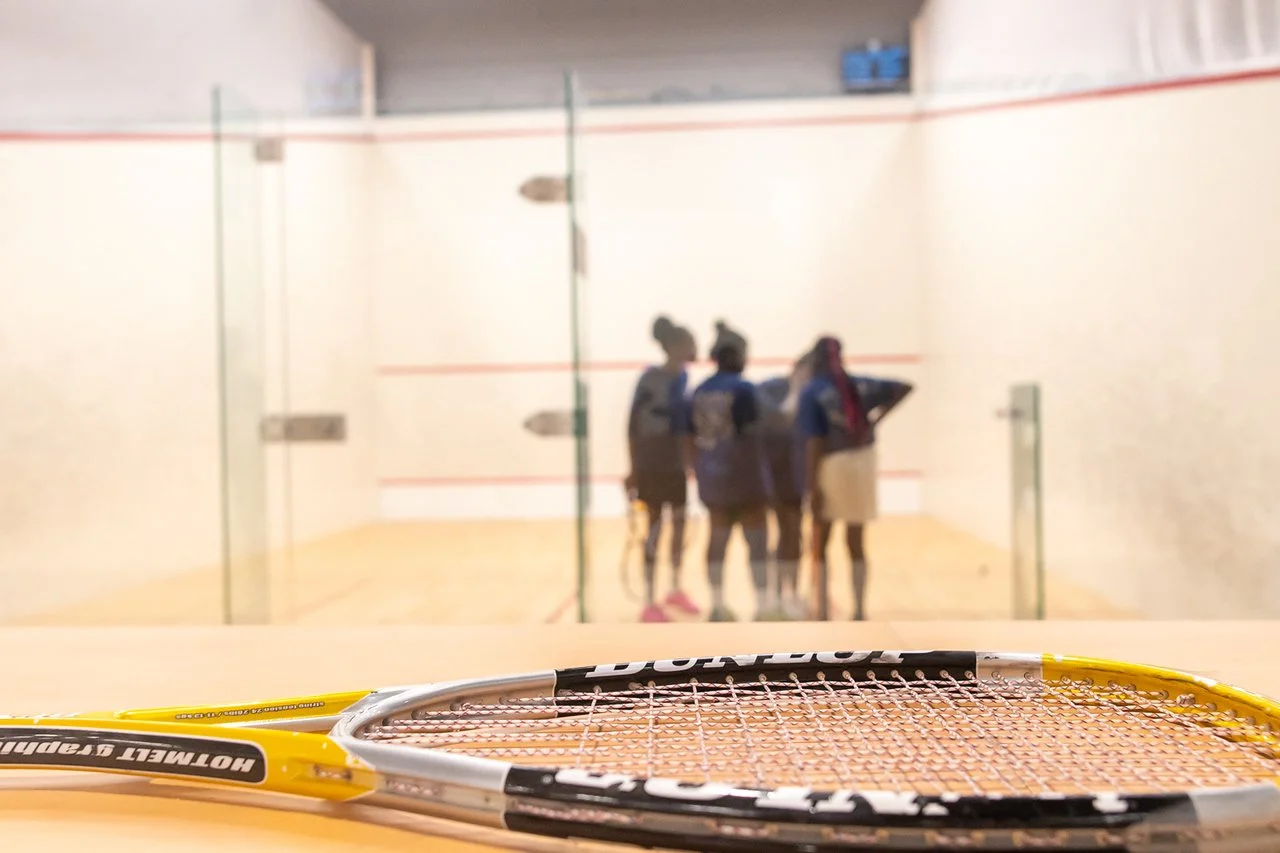
Similar to most other sports, the risk of eye injury is high when playing squash without protective eyewear. To prevent this, all players and coaches must wear appropriate protective equipment whether playing singles or doubles.
-
Squash racquets vary in frame and weight person to each player and game-type. Generally, it is up to preference on what suits your own strengths and abilities.
-
Squash requires non-street shoes, or non-marking shoes, to not damage the courts. Running shoes are also not recommended because of the lack of lateral support.
-
The different squash balls may be indicated through various colored dots. This includes Introduction (blue), Progress (red), and Competition (single yellow).
Court lines
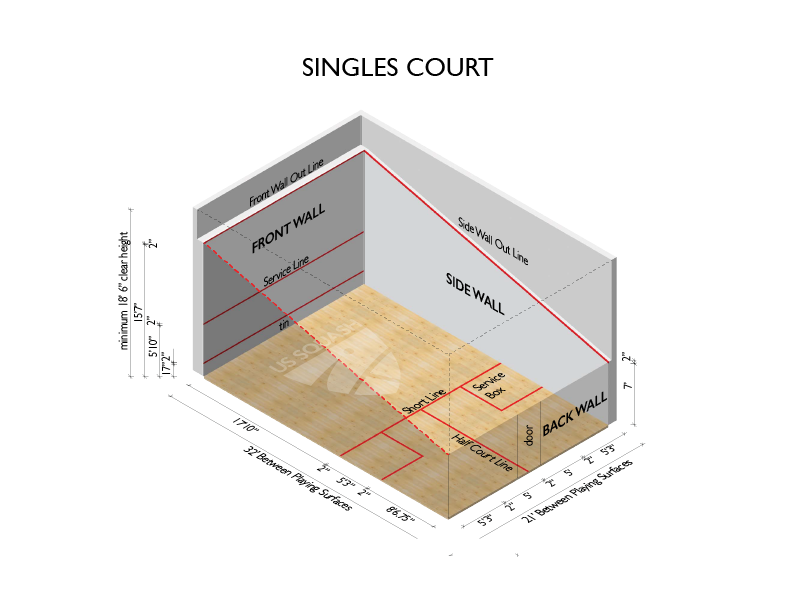
The squash court features an out of bounds line, which is the top-most line on the front wall, which also runs along the two side walls. Any ball that strikes the walls on or above these out of bounds lines is considered to be out.
The lowest line on the front wall is called the “tin.” The ball cannot hit on or below this line. During the course of a point, the ball must remain above the tin, but below the upper out of bounds line at all times.
The line across the middle of the front wall is called the “service line.” All serves need to strike the front wall above this line and below the out of bounds line.
On the floor, there is a left box, a right box, and a half court line, which separates the back half of the court into two halves. The two service boxes and half court line are used during the serve.
The Service
To serve the ball, aka “begin a rally,” the serving player needs to have part of one foot touching the floor within the service box without touching the surrounding line. For a service to be good, the ball must hit the front wall between the middle line (service line) and the upper line (out line).
After striking the front wall, the first bounce must be within the back quarter on the opposite side of the court (your opponent’s quarter). However, the ball does not need to bounce if your opponent chooses to volley the serve.
If at any point of the serve the ball touches the court outside of the described areas, the serve is a fault and your opponent wins a point.
The rally
Once a successful serve has been delivered, the rally has officially started. The players take turns hitting the ball and need to move around each other to retrieve the ball after it strikes the front wall but before it bounces on the floor twice. In order to make a “fair” return during a rally, a player must hit the ball to the front wall on the fly. The ball may strike the side or back walls at any time in the course of a shot, as long as the ball hits the front wall on the fly without touching any area outside the boundary of the court.
A match is the best of 3 or 5 games. Each game is played to 11 points. The player who scores 11 points first wins the game. If the score reaches 10-all, the game continues until one player wins by two points. Either player may score points (PAR: point–a–rally). The server, on winning a rally, scores a point and retains the service; the receiver, on winning a rally, scores a point and becomes the server.
During a play, a player is entitled to freedom from interference by the opponent. To avoid interference, the opponent must try to provide the player with unobstructed, direct access to the ball, a fair view of the ball, space to complete a swing at the ball, and freedom to play the ball directly at my part of the front wall. If a player finds that their opponent is interfering with the play, they can accept the interference and play on, or stop the play. It is preferable to stop the play and call out “Let” if there is a possibility of colliding with the opponent, racquet or ball.
If the opponent made every effort to avoid the interference, the point is replayed as a “Let.” If the interference was substantial and the player could not have played the ball, then a “No Let” or “Stroke” is awarded where the player wins a point.
The basis of interference is complicated, and can be confusing to new squash players. It is highly recommended that more experience is necessary to make certain calls.
“Let” interference
When the opponent tried to or is not able to get out of the way for a collision with a player, racquet or ball. The point is subject to replay.
“No Let” or “Stroke” interference
When the opponent does not get out of the way for a collision with a player, racquet or ball, even though they could have. The player impacted wins a point.